Roundup, cancer and the difference between scientific and legal causality
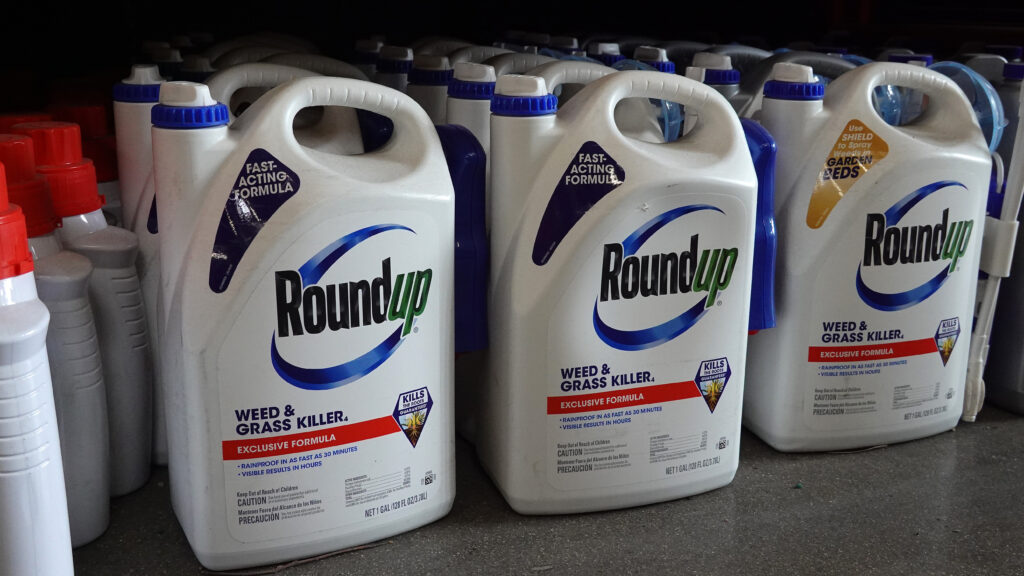
When the Supreme Court handed Monsanto a major victory in the Roundup lawsuit on Thursday, the headlines read like a scientific event: a case over whether Roundup causes cancer.
But Monsanto v. Durnell did not settle this question. The court held that the federal pesticide law preempts a state failure-to-warn claim when the Environmental Protection Agency failed to require a cancer warning on the product label.
This is an important legal decision. This is not the same as a scientific finding that glyphosate is safe or dangerous.
This decision is just the latest example of a serious problem: science and law use the same word – causation – while asking different questions.
My own work has moved between clinical care, population health research, and law, and it is at this boundary that this confusion becomes most visible. In epidemiology, causality is usually a population-level inference. Researchers wonder whether exposure reliably changes disease risk among groups of people. This requires replication, statistical association, dose-response evidence, biological plausibility, and efforts to rule out confounding. Even then, the conclusions remain probabilistic. A risk factor can increase the likelihood of illness without proving why a person became ill.
The legal system has a different task. In civil litigation, the plaintiff generally must demonstrate that the specific harm would likely not have occurred but for the defendant’s conduct. This standard does not exist to produce scientific consensus. It exists to resolve disputes.
This distinction explains why litigation over glyphosate has been so confusing. In 2015, the International Agency for Research on Cancer classified glyphosate as probably carcinogenic to humans. The US Environmental Protection Agency and the European Food Safety Authority have not reached the same conclusion under their regulatory frameworks. A jury cannot decide the global scientific status of glyphosate, however. He hears the case of a particular complainant: exposure history, diagnosis, expert testimony, internal documents, warnings, company conduct and credibility. A plaintiff’s verdict may mean that the legal threshold has been met. This does not mean that the scientific community as a whole has reached a definitive conclusion.
The Talc dispute shows the same problem in another form. Johnson & Johnson and other defendants faced allegations that talc products contributed to ovarian cancer or mesothelioma. Some claims focus on talc itself. Others focus on alleged asbestos contamination, a different problem because asbestos is a well-established carcinogen. In 2024, IARC classified talc as probably carcinogenic to humans, based on limited evidence in humans, sufficient evidence in laboratory animals, and strong mechanistic evidence.
This classification is important. But this does not mean that all cancers occurring after talc use are caused by talc.
The scientific question is specific: does the use of talc, asbestos-contaminated talc or perineal talc reliably increase the risk of cancer in populations, under what exposure conditions and with what level of confidence? The court’s question is different: Would the plaintiff’s injury have occurred without the exposure to the product, and was that causation legally sufficient to assign liability?
The Talc litigation also shows why juries do not evaluate causation in a sterile scientific vacuum. Plaintiffs can assert not only epidemiology, but also company knowledge, internal documents, inadequate warnings, disputed testing practices and alleged cover-up. If jurors believe a company acted deceptively, they may more aggressively interpret ambiguous scientific evidence.
The problem is intensified because people are uncomfortable with randomness. Cancer seems too fraught to be attributed to risk, chance or multifactorial vulnerability, so jurors and the public naturally look for a concrete cause.
These same dynamics are now playing out in disputes over social media and youth mental health.
States, school districts and families are asking courts to determine whether platforms like Instagram, TikTok, Snapchat and YouTube have contributed to anxiety, depression, self-harm, addictive consumption, educational disruptions and public costs. Some cases have already been resolved. To the public, these cases may seem like a scientific discovery: social media has caused depression in adolescents.
But the scientific question is more difficult.
Researchers should ask whether exposure to social media or specific features of the platform design independently drive mental health outcomes in populations. This requires separating social media use from adolescent distress, loneliness, family instability, sleep disorders, bullying, genetics, psychiatric vulnerability, pandemic effects, and reverse causality. Teenagers who are depressed or socially isolated may use social media differently than those who do not. Excessive consumption can be a cause, a consequence or both.
A cautious scientific conclusion does not mean that social media is harmless. This does not mean that specific platform features cannot contribute to injuries. This means that the causal question is multifactorial and difficult to isolate.
Courts can still move forward because they are not designed to wait for perfect causal certainty. The legal question may be whether the platform’s design choices, including algorithmic recommendations, infinite scrolling, notifications, engagement loops, filters, or addictive design features, predictably contributed to harming particular users or imposing costs on schools and public systems. Internal documents, warnings, product design, predictability, and corporate conduct can have legal importance even when population-level science remains uncertain.
Asbestos provides a useful contrast.
In asbestos litigation, legal causation and scientific consensus are often closely intertwined. The causal relationship between asbestos exposure and mesothelioma is strong, well established and widely accepted. Courts do not operate in the same zone of scientific uncertainty that surrounds many allegations regarding glyphosate, talc, or social media.
I’m not saying that plaintiffs are always wrong or that courts should ignore damages until the science reaches absolute certainty. The argument is more limited: not all legal conclusions, verdicts or settlements have the same scientific meaning.
Sometimes law and science converge. Sometimes courts assign liability in individual disputes when the broader scientific evidence remains mixed, uncertain, or difficult to translate into individual causation.
Public confusion arises when these situations are lumped into one category.
Grand jury awards can make it appear that scientific causation is established when it is not. Regulations may give the impression that legal exposure amounts to admitted causation when it is not. Regulatory disagreement may lead the public to assume corruption when the real problem may be different standards of proof. Scientific caution can seem like evasion. Legal accountability can look like scientific proof. Neither interpretation is reliable.
Science is designed to estimate risks, test hypotheses, identify patterns, and reduce the likelihood of false causal inferences. The law is designed to resolve disputes, assign responsibility, compensate for harm, deter wrongdoing, and impose duties. These functions are related, but not identical.
This distinction is important for public trust. If people believe that a jury’s verdict proves scientific consensus, subsequent scientific caution may appear corrupt. If people think that regulatory prudence invalidates any legal action, the courts may appear irrational. If people believe that a settlement proves causation, the lack of recognized liability may seem like an evasion.
So what should we do?
First, courts and lawyers should be more explicit about the causal question to be answered: general causation, specific causation, regulatory risk, failure to warn, product design, foreseeability, or legal preemption.
Second, expert testimony and public reporting should separate these categories. A hazard classification is not the same as proof that a product caused injury to a plaintiff. A settlement is not the same as a recognized causal link. A regulatory decision is not the same as a jury verdict. A Supreme Court preemption ruling is not the same as a scientific exemption.
Journalists also have a role to play here. Coverage of cases involving Roundup, social media, talcum powder and other sensitive topics should tell readers not only who won, but also what question the court actually answered. Monsanto v. Durnell was a landmark decision regarding federal pesticide labeling and state tort law. This is not a definitive scientific verdict on glyphosate.
Public trust will continue to erode if every legal result is treated as if it were a scientific discovery. A court can assign responsibility without resolving the scientific question. Science can remain cautious without denying the damage. And courts can limit liability without proving that a product is harmless.
Alex Smolak, Ph.D., is an epidemiologist in the Infectious Disease Epidemiology Group at Weill Cornell Medicine-Qatar.
PakarPBN
A Private Blog Network (PBN) is a collection of websites that are controlled by a single individual or organization and used primarily to build backlinks to a “money site” in order to influence its ranking in search engines such as Google. The core idea behind a PBN is based on the importance of backlinks in Google’s ranking algorithm. Since Google views backlinks as signals of authority and trust, some website owners attempt to artificially create these signals through a controlled network of sites.
In a typical PBN setup, the owner acquires expired or aged domains that already have existing authority, backlinks, and history. These domains are rebuilt with new content and hosted separately, often using different IP addresses, hosting providers, themes, and ownership details to make them appear unrelated. Within the content published on these sites, links are strategically placed that point to the main website the owner wants to rank higher. By doing this, the owner attempts to pass link equity (also known as “link juice”) from the PBN sites to the target website.
The purpose of a PBN is to give the impression that the target website is naturally earning links from multiple independent sources. If done effectively, this can temporarily improve keyword rankings, increase organic visibility, and drive more traffic from search results.