
EndoSure and Ziwig Endotest – everything I’ve read so far, and when will they be available?
For decades, getting a diagnosis of endometriosis has often meant years of debilitating symptoms, repeated visits to the GP, tests that came back “normal” and, in many cases, laparoscopic surgery to confirm the disease.
This could finally start to change.
In July 2026NICE has announced that two innovative tests – EndoSure And Ziwig Endotest – will be made available through the NHS in England and Wales as part of a three-year evidence collection programme. Although neither replaces clinical assessment, both represent a step toward faster, less invasive diagnosis.
If you’ve researched any of the tests or are wondering how to make them private, here’s everything you need to know.
What is an EndoSure test?
THE EndoSure test is a non-invasive diagnostic technology designed to identify endometriosis without surgery.
Unlike saliva-based tests, EndoSure measures electrical signals generated in the intestine using adhesive sensor pads placed on the abdomen. The theory is that endometriosis changes the activity of intestinal nerves and muscles in measurable ways.
The test itself takes approximately 45 minutes. Beforehand, you will usually need to fast for six to eight hours and drink water according to the test instructions. Results are available immediately after assessment rather than requiring laboratory processing.
Above all, EndoSure is is not intended to diagnose endometriosis alone. Instead, it is used alongside your symptoms, exam and imaging to help clinicians decide next steps.
What is Ziwig Endotest?
THE Ziwig Endotest takes a completely different approach.
Instead of examining electrical activity, it analyzes a saliva sample for tiny biological molecules called microRNA. Researchers have identified patterns of these molecules associated with endometriosis.
Using next-generation sequencing combined with artificial intelligence, the laboratory analyzes these biomarkers to determine whether endometriosis is likely present.
The test was developed for older women 18 to 43 with symptoms suggestive of endometriosis, including:
- chronic pelvic pain
- painful periods
- pain during sex
- pain when emptying the intestines or urinating
- infertility
Unlike many investigations, the saliva test can usually be performed while taking hormonal medications and at any time during the menstrual cycle.
Are they accurate?
This is naturally one of the biggest questions.
Early evidence suggests that EndoSure and Ziwig Endotest could significantly reduce diagnostic times, which currently average around nine years in the UK. However, NICE has approved both technologies under managed deployment so that additional evidence can continue to be collected before widespread adoption.
For the Ziwig Endotest specifically, published clinical studies reported:
- Sensitivity greater than 97%
- Specificity greater than 93%
These are promising figures, although performance in day-to-day NHS practice will continue to be monitored.
Neither test is considered a substitute for a specialized evaluation, and doctors will always consider your symptoms, exam results, and imaging before making a diagnosis or treatment plan.
How much do these tests cost?
The cost depends on where you access it.
As the NHS rollout begins, eligible patients may be able to receive EndoSure through participating NHS services without paying privately.
If you are considering private testing, prices vary between providers and may change over time. Historically, similar private diagnostic tests for endometriosis have cost several hundred booksIt is therefore worth checking directly with the clinic of your choice for current prices.
Can we see endometriosis on ultrasound?
Sometimes, but not always.
This is one of the biggest misconceptions about endometriosis.
An experienced specialist sonographer can identify:
- ovarian endometriomas
- deep infiltrative endometriosis
- endometriosis affecting the bowel or bladder
- adhesions in some cases
However, superficial endometriosiswhich is the most common form, is often not visible at all on ultrasound.
This means that it is entirely possible to have a normal exam while living with significant endometriosis.
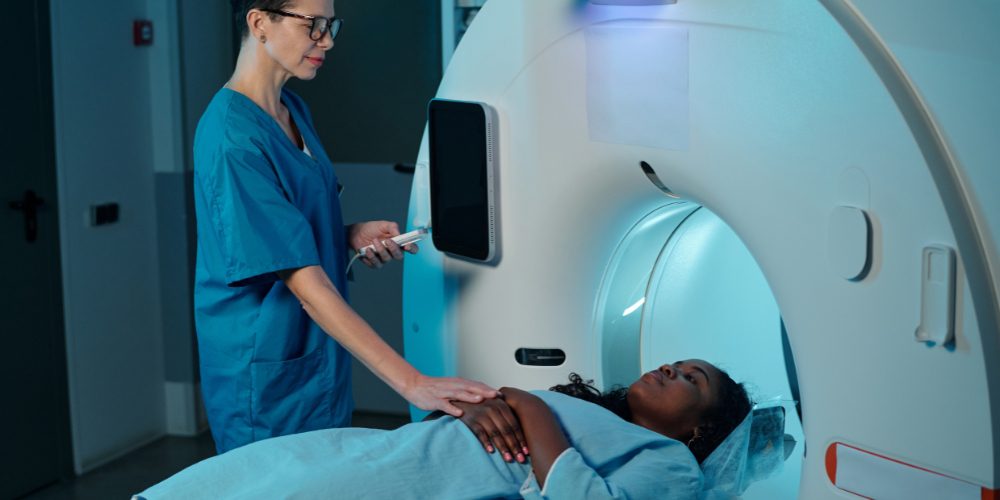
Can endometriosis be visible on MRI?
Yes, but with limits.
MRI is particularly useful for detecting:
- deep infiltrative endometriosis
- large endometriomas
- disease involving the bowel, bladder, or pelvic ligaments
Like ultrasound, MRI may still fail to detect superficial disease.
A normal MRI therefore does not exclude endometriosisparticularly if your symptoms strongly suggest illness.
Increasingly, specialists are combining MRI findings with symptom history, examination and, potentially, newer tests like EndoSure or Ziwig Endotest to establish a clearer diagnostic picture.
Why we’re excited
For many women, the most frustrating aspect of endometriosis is not just the symptoms, but also waiting for answers.
Repeat appointments, normal imaging, long surgical waiting lists and being told that painful periods are “just part of being a woman” have contributed to years of late diagnosis.
Non-invasive diagnostic tools have the potential to change this.
While they won’t replace specialty care, they could help identify patients earlier, prioritize referrals and reduce the need for diagnostic surgery in some cases.
This is an encouraging development for the it is estimated that one in ten women are affected by endometriosis – and, hopefully, this is just the start of faster, more accessible diagnosis.
On your playlist
If endo testing is a priority search, put these resources on your radar:
- Rapid endometriosis tests to be made available on the NHS in England and Wales (Guardian headline)
- Can we see endometriosis on ultrasound? (The Complete 101 with Experts in Advanced Diagnostics ReceptivaDx
 )
) - These influencers with endometriosis are our ultimate support that follows
The article EndoSure And Ziwig Endotest – everything I’ve read so far, and when will they be available? appeared first on The Ribbon Box.
PakarPBN
A Private Blog Network (PBN) is a collection of websites that are controlled by a single individual or organization and used primarily to build backlinks to a “money site” in order to influence its ranking in search engines such as Google. The core idea behind a PBN is based on the importance of backlinks in Google’s ranking algorithm. Since Google views backlinks as signals of authority and trust, some website owners attempt to artificially create these signals through a controlled network of sites.
In a typical PBN setup, the owner acquires expired or aged domains that already have existing authority, backlinks, and history. These domains are rebuilt with new content and hosted separately, often using different IP addresses, hosting providers, themes, and ownership details to make them appear unrelated. Within the content published on these sites, links are strategically placed that point to the main website the owner wants to rank higher. By doing this, the owner attempts to pass link equity (also known as “link juice”) from the PBN sites to the target website.
The purpose of a PBN is to give the impression that the target website is naturally earning links from multiple independent sources. If done effectively, this can temporarily improve keyword rankings, increase organic visibility, and drive more traffic from search results.