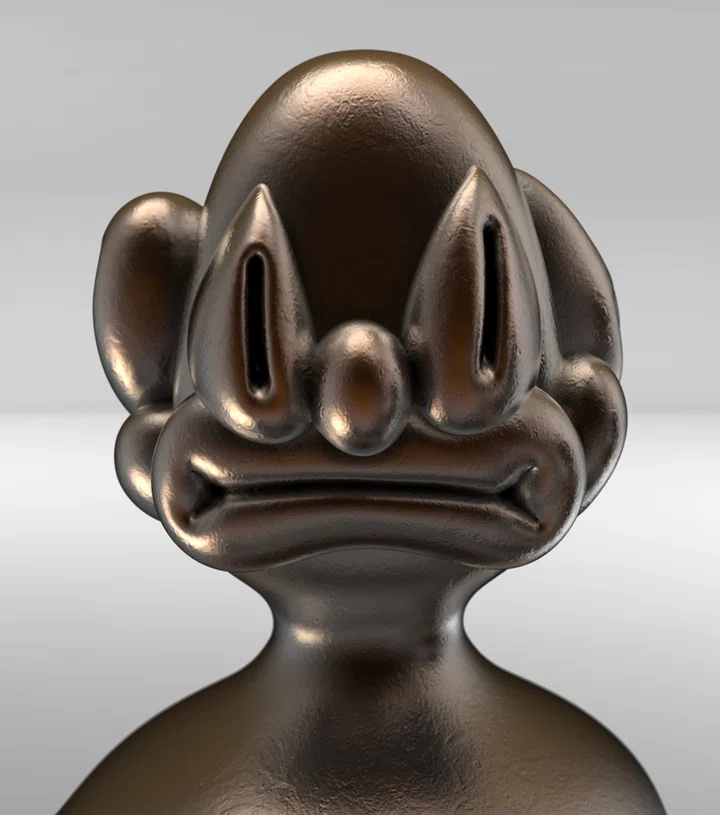
More than a trophy: when artists and designers redefine awards
From polished silver cups to ornate statuettes, trophies have long been symbols of achievement. But in recent years, a quiet transformation has occurred. In sport, music, fashion and architecture, trophies are no longer just objects of recognition, they become works of art in their own right.
Today, many of the world’s most prestigious awards ask artists, designers and architects to rethink what a trophy can be. The result is a new category of objects: one that sits somewhere between sculpture, design and cultural artifact.
The evolution of the Trophy
Traditionally, trophies followed a familiar visual language, symmetrical shapes, metallic finishes and historical references to classic vessels. They were designed to signal prestige and permanence.
But as the creative industries have evolved, so have expectations of what an award should represent.
Now, instead of reproducing the past, trophies are used to reflect identity, innovation and cultural context. These are no longer just prices, they are declarations.

When artists take the lead
One of the most striking developments was the involvement of world-renowned artists and designers in the design of the trophies.
The BRIT Awards are perhaps one of the best-known examples of this. Over the years, its emblematic statuette has been reinvented by great creative figures:
- Tracey Emin introduced a deeply personal handwritten aesthetic
- Anish Kapoor created a translucent red shape that plays with light and perception
- David Adjaye designed a version in solid glass, bringing clarity and architectural weight
Elsewhere, artists have adopted equally bold approaches. For the Turner Prize, the trophy itself completely resists spectacle – often minimal, even deliberately discreet – reinforcing the idea that the concept trumps the object. In contrast, the MTV Video Music Awards retain their astronaut “Moon Person,” a pop culture icon periodically reinterpreted by artists such as Kaws.
Each iteration reflects not only the price, but also the voice of the artist behind it. The trophy becomes a collaboration between the institution and individual creativity.


Design meets fashion and form
The Fashion Awards have also taken this approach, commissioning known designers to promote materials and shapes.
Figures like Marc Newson and Ross Lovegrove have created trophies that are closer to product design or futuristic sculpture than traditional awards. Lovegrove’s crystal piece, inspired by a double helix, transforms the trophy into something almost biological, alive with movement and meaning.
Similarly, Trophy designer Tom Dixon explored metallic and industrial forms in award objects and installations, blurring the line between lighting, sculpture and ceremonial object.
Here, the trophy becomes a reflection of the industry itself: avant-garde, experimental and constantly evolving.

Architecture and material narrative
In architecture and design circles, trophies are increasingly rooted in location and material.
The Dezeen Awards took a particularly innovative approach. One year, trophies were made from London clay, shaped to resemble bricks, anchored in the very material of the city. Other editions have used marble paper or reclaimed wood, integrating sustainability and locality into the object itself.
Other awards followed suit. The Pritzker Architecture Prize, often considered architecture’s highest honor, features a bronze medallion rather than a traditional trophy, minimal, architectural and symbolic rather than decorative.
Meanwhile, the RIBA Stirling Prize uses an elegant, modernist object that reflects architectural precision and clarity.
This change signals a deeper change: trophies are no longer generic. They are contextual and tell stories about their origins and values.


Trophies beyond the Western lens
This development is not limited to Europe or North America. At global sporting events, artists are also reshaping how success is portrayed.
For the Africa Cup of Nations, designer Yinka Ilori created vibrant “Man of the Match” trophies that draw on color, patterns and cultural heritage. These pieces move away from uniformity and instead celebrate identity, storytelling and place.
In a different context, the Olympic Games medals themselves are often redesigned for each host city, incorporating local materials and narratives, even transforming the medals into designed cultural objects.
They remind us that trophies can have meaning well beyond the moment they are awarded.


Luxury, craftsmanship and collaboration
Even in more traditional awards spaces, there is an increasing emphasis on craftsmanship and material innovation.
For the 50th anniversary of the Academy of Country Music Awards, jewelry designer David Yurman created a trophy made of sterling silver and black diamonds. The piece bridges the gap between fine jewelry and the symbolic object.
Likewise, the Oscar statuette, while iconic and consistent, has undergone subtle refinements in materials and production over time, balancing tradition and evolving craftsmanship.
The Trophy as a Sculpture
What connects all of these examples is a fundamental shift in thinking.
The trophy is no longer just a symbol of success. It is:
- A sculptural object
- A reflection of its cultural moment
- A collaboration between disciplines
- A physical embodiment of values: innovation, identity, sustainability
In many cases, the trophy itself becomes as important as the achievement it represents.
Rethink recognition
As the public becomes more visually literate and culturally aware, there is a growing expectation about the meaning of objects. A generic reward no longer seems sufficient.
Instead, institutions ask:
- What does this price represent?
- Who are we celebrating?
- How can the object reflect this?
This is where artists, designers and architects bring something unique. They don’t just create objects, they create stories.


Where this leads
This change opens up exciting possibilities, especially in the field of sport.
As competitions like the FA Cup continue to expand their cultural presence through exhibitions and creative collaborations, there is an opportunity to rethink not only how the game is experienced, but also how it is commemorated.
What if trophies were not just historical symbols, but evolving works of art?
What if they reflected the communities, materials and stories behind the competition?
In this space between art and recognition, the trophy becomes much more than an outcome.
It becomes part of the story itself.
PakarPBN
A Private Blog Network (PBN) is a collection of websites that are controlled by a single individual or organization and used primarily to build backlinks to a “money site” in order to influence its ranking in search engines such as Google. The core idea behind a PBN is based on the importance of backlinks in Google’s ranking algorithm. Since Google views backlinks as signals of authority and trust, some website owners attempt to artificially create these signals through a controlled network of sites.
In a typical PBN setup, the owner acquires expired or aged domains that already have existing authority, backlinks, and history. These domains are rebuilt with new content and hosted separately, often using different IP addresses, hosting providers, themes, and ownership details to make them appear unrelated. Within the content published on these sites, links are strategically placed that point to the main website the owner wants to rank higher. By doing this, the owner attempts to pass link equity (also known as “link juice”) from the PBN sites to the target website.
The purpose of a PBN is to give the impression that the target website is naturally earning links from multiple independent sources. If done effectively, this can temporarily improve keyword rankings, increase organic visibility, and drive more traffic from search results.