To fight chronic disease, MAHA could look to Slovenia for tips
LJUBLJANA, Slovenia — In the U.S., the Trump administration, driven by health secretary Robert F. Kennedy Jr., has elevated the issue of chronic diseases to never-before-seen political salience. Prioritizing these ailments could improve the nation’s health and kick-start its stubborn life expectancy rates, Kennedy preaches.
Here in Slovenia, that approach would be old news.
For decades, this central European country has built the prevention of chronic diseases into its health system. Medical training has put an emphasis on detecting early signs of such ailments, and family medicine practices screen for the conditions as a rule. All Slovenians are urged to come in for these screenings starting around age 40 and then every few years after that.
The country has also built up a system so that when clinicians identify someone at risk of a chronic illness — those whose blood readings set off alarm bells about heart disease, for example, or those vulnerable to diabetes — they can route them to programs that feature dedicated lifestyle coaching and counseling. The country has adapted its program offerings as new threats have emerged, rolling out, for example, obesity workshops focused on children and families in recent years.
In turn, Slovenia has seen some success. Researchers credit the country’s lower rates of chronic diseases, particularly cardiovascular conditions, as one factor that’s helped it make greater gains in health outcomes versus its neighbors. Slovenia’s life expectancy — on par with Germany’s and Denmark’s — surpassed the U.S.’s around 2006 and has achieved steady increases since then, while in the U.S., how long people live has largely stagnated. In 2024, Slovenia’s life expectancy reached 82.3 years — higher than the European Union average of 81.7 years — while in the U.S. in 2023, it was 78.4 years.
It’s perhaps a folly to compare the U.S. health landscape, one that is as much patchwork as it is profit-driven, to that of Slovenia (though it is the birthplace of first lady Melania Trump). The country has a national health system, a population roughly 1/150th of the U.S., and an existence as an independent country that just predates the Clinton administration.
But the country’s strategy provides one glimpse at what centering chronic diseases can look like, with a recognition that in this day and age, they are scourges that need dedicated focus. It also shows the rewards that can come with such attention. By some measures, the country has outperformed some larger continental counterparts in reducing the burden of chronic diseases over the past 20 years, although Slovenian women have seen the bulk of that progress versus Slovenian men.
“Slovenia is really at the forefront, because they were really able to make that shift to managing chronic diseases,” said Dijana Spasenoska, a University of Oxford researcher who has studied health outcomes in Slovenia and the other countries that formerly made up Yugoslavia.

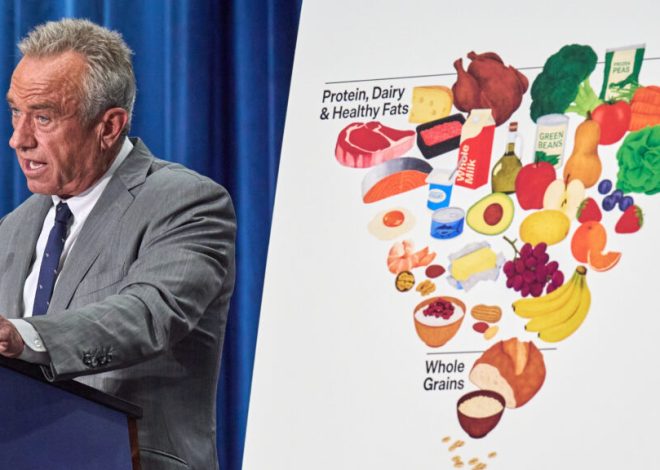
In the U.S., Kennedy touts his promotion of exercise and nutrition, but his chronic disease strategy has so far prioritized removing certain dyes from food and reforming food assistance programs. The closest he has come to structurally changing the primary care landscape is to propose cuts in Medicare rates that would narrow the pay gap between specialists and primary care doctors. And while there’s some hope that the Trump administration’s recent deal with GLP-1 makers could expand access to obesity medications, its signature legislative achievement, the One Big Beautiful Bill, is expected to lead to millions of Americans losing health coverage because of Medicaid cuts.
In Europe, however, others are paying attention to the Slovenian model. One recent week, in a conference room with views of Ljubljana’s pink 17th-century Franciscan Church of the Annunciation and its famed Triple Bridge, a group of health providers from Spain had come to learn how the Slovenian system worked. It was part of a program to share best practices in primary care across the European Union.
Over the day, clinicians outlined one key facet of Slovenia’s chronic disease fight. The country has established what are called health promotion centers throughout Slovenia that are staffed with nurses, dietitians, counselors, and kinesiologists. The centers offer workshops focused on preventing different chronic conditions, complete with a series of individual appointments and group lessons over several months that hit on nutrition, exercise, and stress management. Nurses and doctors who see patients for regular checkups can refer them to the workshops, based on risk factors such as elevated blood lipids, blood sugar, or body mass index.
The health promotion centers are based out of primary care hubs that are found throughout the country and have a long history, dating back to well before independence. The sites have community nurses, dentists, gynecologists, and a range of other general medicine services, and while they once addressed infections like tuberculosis, their focus has since pivoted to address the pressing public health problems of the 21st century.
Sara Recek, a dietitian, explained how she teaches workshop participants about improving their nutrition, finding healthier alternatives for snacks, and using less fat in their cooking. The message stresses balance — how nutrition could support their overall health — not restriction, or else it would feel punitive, she told the Spanish health workers.
She also emphasized the importance of building rapport with the workshop participants, so they would be more inclined to embrace the lessons. It’s about setting specific, measurable goals that people can work toward while anticipating obstacles that could throw off their progress.
“The most important thing is that they know me, they know who I am, so they can trust me,” she said.
The workshops, which date back to 2002, first focused on preventing cardiovascular diseases. The country reached its goal of getting 70% of the target population — men from ages 35 to 65, and women from 45 to 70 — to come in for a checkup within the first few years.
Since then, Slovenia has expanded the suite of workshops to focus on prevention of other conditions, including diabetes and obesity. Health promotion centers also offer dedicated weight loss programs for people with obesity.
What’s important about Slovenia’s approach is that it is systematic, said Rade Pribaković, who works on prevention strategies at the country’s National Institute of Public Health. Primary care offices now invite people in around age 40 for checkups, which are often performed by nurses. The strategy has also helped clinicians pick up people who need treatments for things like high blood pressure earlier on, before their diseases become more serious. The appointments are like the chronic disease version of cancer screening, with detection baked right into primary care.
“When you do prevention, if you don’t reach the great majority of the target population, you don’t reach the goals you set,” Pribaković said. He likened the approach to “kind of nagging the population” to come in for screening.
Now, roughly 50,000 Slovenians a year have some intervention at a health promotion center.
Albina Mravlja, 69, a retired civil servant, first participated in one of the workshops in 2021. She had already been diagnosed with type 2 diabetes, so the focus for her was on improving her health to reduce the risk of the more severe outcomes of her disease.
Learning nutrition strategies, she said, helped her eliminate impulse purchases while grocery shopping and inspired her to cook healthier food, something she had done when her three children were growing up but that had become less of a priority.
“I usually cooked so well for them, but for the last two or three years, I do it for myself,” she said.
The workshop also linked her with exercise classes at a community health center. Mravlja said she had previously struggled to motivate herself to exercise on her own, but having set classes to attend drove her to keep up with the regimen.
Through the workshops, Mravlja has seen her blood sugar drop, and she has lost weight.
‘Good health for lower costs’
Slovenian health officials note that much of the country’s progress in life expectancy, even specific to cardiovascular mortality, has other causes. Smoking has declined. Medical care and treatments have improved. A major factor has simply been the country’s development since declaring independence in 1991, economic growth that corresponds to better health outcomes. A range of other factors have contributed to life expectancy gains, including a reduction in traffic deaths. (It’s worth noting that traffic deaths have trended up over the last decade in the U.S.)
But the fact that Slovenia has seen improvements in reducing chronic diseases, as well as improvements in life expectancy, to a greater extent than its neighbors suggests its prevention strategies are having some impact, said Oxford’s Spasenoska.
And while the country’s life expectancy levels overall place it a bit higher than the average among European countries, it’s achieved those successes while spending less than many others.
“It’s an example of good health for lower costs,” Spasenoska said.
Indeed, the probability of a Slovenian woman dying from a chronic disease before turning 80 declined from 35.6% in 2001 to 23.9% in 2019, while the likelihood of such a death for a Slovenian man dropped from 59.6% to 41.5% over the same period, according to a Lancet paper published this year that examined progress in noncommunicable diseases around the world. Those 2019 death rates were in the ballpark with those in Germany, though Slovenia saw greater drops over the time span.
In the U.S., the chronic disease death rate dropped for women from 37.9% to 31.5%, and for men, from 50.2% to 43%.
It’s not as if Slovenia has solved all of its health problems. The country has one of the highest suicide rates in Europe, particularly among men. And Slovenia — which makes beer, wine, and spirits, and where you may be offered a sample of local blueberry liqueur when you check into your hotel — has one of the continent’s highest drinking rates, and in turn liver problems. The Lancet paper singled out Slovenia for having the greatest contribution from alcohol to chronic disease mortality among men of any of the countries studied. (While women generally live longer than men, the gap in life expectancy in Slovenia — about six years — is greater than in most other developed countries.)
And even with its prevention programs, the country hasn’t been able to counter rising obesity rates, and a corresponding increase in type 2 diabetes. Slovenia ranks roughly in the middle of European countries for obesity. (Slovenian health officials are working on plans for how to best roll out GLP-1 treatments for obesity, which have only just started to become available in the country.)
Slovenia’s youth obesity rate, meanwhile, has shifted up throughout this century, reaching 10.6% in 2022, roughly half the rate in the U.S. Some data indicate that the prevalence of obesity in Slovenian children has flatlined more recently, or even started declining. Still, Slovenia, where every child is offered a healthy meal at school, expanded the workshop offerings to reach this new target population.
Now, providers who see fourth and sixth graders for their usual checkups can refer those at risk to the workshops, complete with meetings with counselors, dietitians, and kinesiologists. The program also incorporates lessons for parents.
“I don’t say to the parents, ‘Change this, change that,’ I invite them politely,” Mateja Habjanič, a psychologist who works with families, explained to the Spanish health workers. “The point of the workshop is that they develop a sense of responsibility, and they create the environment so that the child can make some changes.”
Throughout the day, the Spanish providers questioned the Slovenian health officials about the challenges inherent in running such workshops. What if parents denied their kids had an issue? With the adult programs, don’t people drop out of the programs? What if they don’t want to participate in the first place? And what if people have trouble affording healthier foods, or don’t have time to prepare food for themselves?
Those were all obstacles the workshops ran into, the health officials acknowledged. And even with the infrastructure that Slovenia had set up, there were other issues. It felt like there were never enough dietitians and psychologists to meet the demand. Programs that were dedicated to weight loss had long waitlists. And even if people came out of the workshops with a better understanding of nutrition, for example, it’s not as if their environments had changed.
Sometimes the goals of the workshop were smaller, the providers said, but still pointed to ways to improving people’s health.
“We are looking for small steps, behavioral changes,” Habjanič explained, like motivating parents to go for a walk in the evening with their children instead of settling in front of the TV.
Pribaković, of the National Institute of Public Health, said any country considering how to address chronic diseases needed to identify target populations and build interventions that fit within its national context.
But he also noted that progress on a large scale was only possible with political buy-in. The country’s leaders committed to the chronic disease strategy when it started in the early 2000s, Pribaković said, and they’ve continued to back the efforts.
“It’s one of the crucial points,” he said, “whether there’s political support.”
Firm Law
Agen Togel Terpercaya
Bandar Togel
Sabung Ayam Online
Berita Terkini
Artikel Terbaru
Berita Terbaru
Penerbangan
Berita Politik
Berita Politik
Software
Software Download
Download Aplikasi
Berita Terkini
News
Jasa PBN
Jasa Artikel